
Large Living Room Wall Art — Revamp Your Space
Last month, I visited my friend Sarah’s apartment in Central Hong Kong and hardly recognized the place. The same blank white walls that once seemed flat and impersonal now radiated warmth, depth, and character. So what changed? She had finally committed to large living room wall art — a striking piece from West Elm that ran the length of her main wall.
I was stunned at how one piece of living room wall art could shift the entire feel of her space. The abstract canvas in deep blues and golds didn’t just occupy the space; it formed an arresting focal point that unified the design. Her IKEA sofa suddenly looked more expensive*, and the room looked finished.
That visit ignited my own artwork adventure. I understood my living room walls were crying out for attention. They needed something that would reflect who I am and connect my decor. After combing through options and trying multiple directions, I discovered that the right Big Canvas Art does more than decorate — it reshapes your entire living experience.
- Large wall art quickly adds a bold impression and sets the room’s tone
- The right piece acts as an a design anchor that connects all design elements into a whole
- Wall art reflects your personal style and individualizes otherwise standard spaces
- Proportion is key — bigger pieces often work better than multiple small frames
- Bare walls miss opportunities for adding depth and dimension to your living space
- Placement influences how roomy and composed your room feels
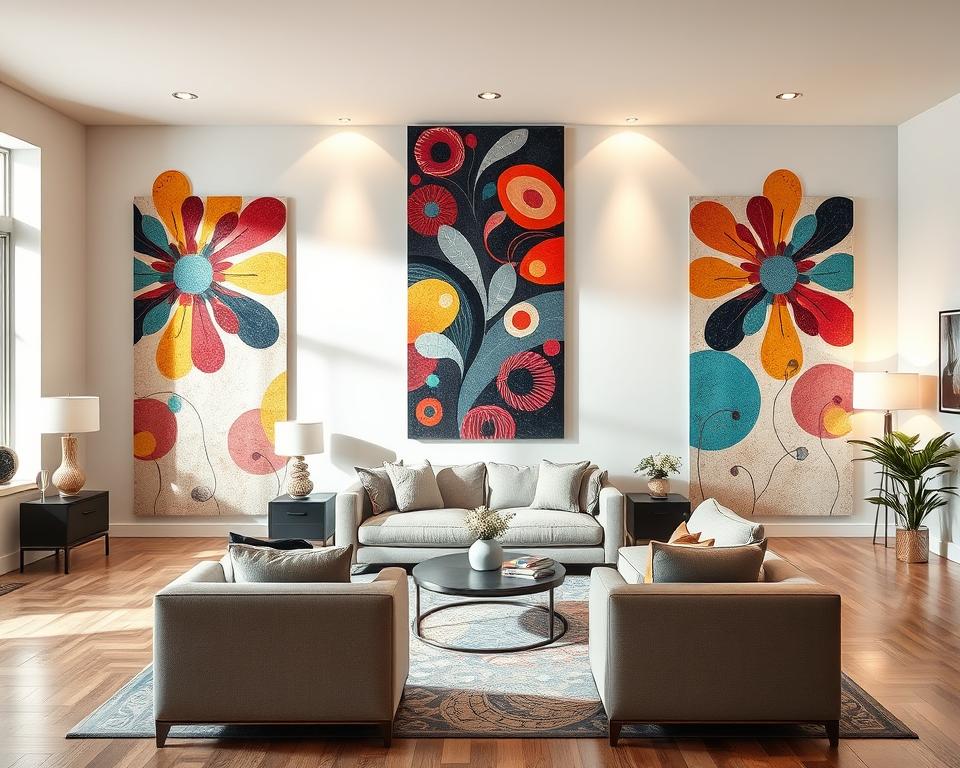
Why Large Living Room Wall Art Makes All the Difference
I’ve discovered that the right piece of large wall art can totally change my living space from ordinary to extraordinary. When I walk into my living room, my eyes go straight to the artwork that anchors the entire room. It’s not just decoration—it’s the core of my living room decor that defines the mood for everything else.
Building a Room-Defining Focal Point
I realized that every well-designed room benefits from a clear focal point. My feature artwork does exactly that by capturing the eye and offering a resting point. Without it, my living room felt scattered and incomplete. Now, my big statement canvas creates that wow factor guests notice immediately when they walk in.
Expressing Your Personal Style Through Statement Pieces
My art selections speaks for me better than any other element in the room. Whether I prefer abstract expressionism or tranquil scenes, my big canvas projects my personality. I’ve found that bold pieces showcase confidence while softer works create tranquility. Each piece is a talking point that highlights my preferences.
Color Harmony Through Art
I use my statement wall decor to unite my room’s color palette. A color-forward piece can inject life to neutral furniture, while tonal pieces introduces polish to colorful spaces. In my open-layout living, artwork subtly defines separate areas—my abstract piece anchors the seating zone while a nature print defines the dining area.
Selecting the Right Oversized Art for Your Space
Finding the right artwork for my living room resembles solving a beautiful puzzle. I’ve learned that choosing oversized canvas isn’t just about picking something pretty—it’s about creating harmony between the artwork and my entire living space. The process involves careful consideration of size, style, and placement to reach that perfect balance.
Nailing Scale & Proportion
When I measure my wall space for large-format art, I use the two-thirds rule. The piece should cover about 60–75% of the available wall width above my sofa or console table. For a sofa around nine feet, I typically choose big canvas art that’s at least 60 inches wide.
Matching Art Styles with Your Interior Design
My interior design theme steers my artwork selection every time. In my minimalist spaces, I prefer geometric abstracts or black-and-white photography. For heritage-inspired spaces, I notice that landscape paintings or classical reproductions fit naturally. Big wall art becomes an extension of my decor personality.
Light, Glare & Wall Real Estate
Natural light is key in how my large canvases look throughout the day. I position vibrant pieces away from direct sunlight to minimize fade. In darker corners, I choose lighter artworks with metallic accents that play with available light, making my room appear larger and inviting.
Transformative Big Abstract Art Ideas
When I think about the power of big abstract wall art, I’m struck by how a single piece can dramatically shift a room’s energy. My living room came alive when I added a large abstract canvas above my sofa. The transformation was surprisingly fast and dramatic.
Abstract wall art offers endless possibilities for personal expression. I’ve discovered that bold, colorful pieces from color field or action-painting inspirations add motion and dynamism in any space. These paintings don’t just cover blank space; they inject soul and identity to your home.
The beauty of a big abstract painting lies in its flexibility. In my bedroom, I went with calming blues and soft grays that promote relaxation. For my home office, I installed a vibrant piece with energetic brushstrokes that helps me focus throughout the day. Abstract wall art meets each viewer uniquely, making it perfect for any room.
Size is critical when selecting artwork. I recommend picking pieces that cover at least ~65% of your wall space above furniture. Popular options include:
- Oversized canvas prints (60”+)
- Multi-panel sets for wider walls
- Mixed media abstracts with relief
- Geometric patterns in bold colors
Big abstract wall art from reputable online galleries offers authentic pieces that become conversation starters. These paintings create focal points that anchor your entire room design while reflecting your unique taste.
Gallery Walls vs. One Big Canvas
When I’m weighing between a curated gallery wall and a single large canvas for my living room, I always consider the mood I want to create. Both options can have big impact, but each brings its own unique energy. A group of pieces narrates a journey through multiple pieces, while a single large canvas creates immediate clarity.
When to Choose Multiple Pieces
I find that gallery wall ideas shine when I want to tell a layered story through various memories and art styles. Multiple Big Wall Art pieces let me:
- Blend memories with fine art
- Add rhythm over sofas and corridors
- Vary frames to achieve eclectic character
- Change individual pieces seasonally without redoing everything
Power of One: The Statement Canvas
Oversized canvas prints command attention instantly. I love using them when my room needs a strong focal point. A single piece simplifies the story and gives my space a sophisticated gallery feel. Statement wall decor is especially effective above my fireplace or behind my sofa where it centers the composition.
Combining Scales for Balance
My favorite approach mixes the two. I pair one large canvas with supporting artworks nearby. This technique builds dimension without noise. By maintaining a connected palette but varying frame sizes, I achieve a balanced look that looks thoughtful but easygoing.
3D Wall Art and Contemporary Installations
When I want to introduce dimension to my living room walls, I look beyond traditional flat canvases. Modern art installations bring an exciting three-dimensional element that transforms any space into a gallery-like environment. These pieces play with shadow, catch light, and encourage multiple viewing angles.
3D Wall Statements
I find that sculptural pieces do the trick on plain walls. These contemporary wall hangings stand off the surface, creating dynamic shadows throughout the day. Popular options include:
- Geometric wire sculptures from CB2
- Carved wooden panels with Asian motifs
- Resin abstracts with fluid shapes
- Paper relief maps and contours
Metal and Wood Installations
Metal wall sculptures introduce sleek edge to my space. I love how copper pieces from select retailers gain character. Wood installations bring natural calm—reclaimed teak branches or carved mahogany panels serve as stunning home accent artwork. These materials work beautifully in minimalist settings where surface detail shines.
Soft Textile Statements
Soft textiles add cozy appeal to hard surfaces. I’ve discovered that macramé pieces from Anthropologie or handwoven tapestries bring bohemian charm without visual overload. These contemporary wall hangings soften echo too, making spaces feel quieter. Natural fibers like jute and wool complement both rustic and modern interiors beautifully.
Positioning Abstracts for Peak Effect
When I first started decorating my home, I learned that art placement choices can significantly alter a room’s energy. The right positioning turns a simple piece into an interior design focal point that captures every visitor’s eye.
Above my sofa, I hang my largest statement piece at comfortable viewing height. This feels connected and close while maintaining visual balance. The bottom edge sits about 8 inches above the sofa back, giving the Abstract Wall Art artwork visual air without sitting awkwardly on the wall.
I’ve discovered that asymmetrical placement does wonders for creating visual interest. My big living room canvas doesn’t always need perfect centering. Shifting a piece slightly to one side and balancing it with a floor lamp or tall plant creates a more dynamic composition that reads designed, not stiff.
In my bedroom, I prefer calming abstract wall art positioned lower on the wall behind my bed. Soft, muted abstracts in cool blues and greys set a restful mood perfect for rest. The artwork begins right above the headboard, making it easy to see from bed.
My dining room features a color-forward abstract piece mounted at standing eye level. This placement encourages conversation and adds energy to dinner parties. Large living room wall art principles apply here too – I keep at least 6 inches of space from the ceiling to keep the ceiling line open.
Gray Abstract Art and Neutral Tones in Living Room Decor
I’ve discovered that gray abstract art offers a timeless backbone for any living room decor. These neutral pieces flex with changes in my space, shifting with seasons and swaps while holding a refined presence. The beauty of neutral tones lies in their ability to enhance without overpowering with existing design elements.
Harmonizing Statement and Soft Tones
When I select big abstract wall art in gray tones, I find it hits harmony between standing out and supporting balance. My favorite approach includes:
- Charcoal art with warm creams for bold contrast
- Adding silver metal frames to enhance metallic accents throughout the room
- Layering different shades of gray for depth without clutter
Monochrome for Modern Sophistication
I’ve learned that monochromatic schemes using gray abstract art improve my living room decor to museum-like calm. Black-and-white photography paired with grayscale paintings keeps a streamlined aesthetic that looks curated and calm. Big abstract wall art in these tones acts as an anchor, allowing me to play with materials through pillows, throws, and rugs without upsetting balance.
“Great art comforts and confronts in equal measure” – a contemporary artist
This approach lets decorative mirrors with clean-lined frames complement the artwork while reflecting light to brighten the space naturally.
Statement Murals for Living Rooms
When I want to make a big impact in my living room, decorative wall murals offer endless possibilities. These striking pieces serve as both functional art and conversation starters. From immersive photo scenes to mirrored art, I’ve discovered that the right mural can completely transform the feel of any space.
Photo & Landscape Murals
I find photography murals add polish and personality to my walls. Whether I choose magazine-grade city scenes or serene nature scenes from photographers like Ansel Adams, these pieces create atmospheric depth to my room. Big wall art featuring landscapes creates windows to other worlds right in my living space.
My favorite photography options include:
- Black and white architectural prints|from cities like Paris
- Colorful sunset scenes over seascapes
- Alpine vistas that bring natural grandeur indoors
- Vintage travel posters from brands like TWA
Custom Murals vs. Ready-Made Big Wall Art
I’ve learned that choosing between custom and ready-made pieces is about resources and vision. Custom decorative wall murals from studios like artisan studios deliver tailor-made impact. Ready-made options from retailers like West Elm offer quality home accent artwork at accessible prices.
Mirrors as Art
Mirrors serve two roles in my decor strategy. I use decorative frames from brands like select makers to turn functional pieces into stunning big wall art. These reflective surfaces make my room feel larger while bringing sophistication to empty walls.
Final Take
I’ve discovered that large wall art does more than just cover blank walls. It becomes the heartbeat of my living room, shaping a mood that speaks to everyone who enters. From color-rich abstracts to sleek metal sculptures, each piece I choose tells a story about my style and turns bare walls into conversation pieces.
Living room wall art has taught me that proportion drives impact. My journey through different options proved that one large canvas leads the room while curated groupings invite closer looks. Modern installations add contemporary attitude to classics, and gray-toned abstracts add sophistication without stealing the palette.
The right big canvas creates a signature interior. I’ve learned to listen to my gut when selecting pieces that spark joy. Whether I’m drawn to dramatic murals from West Elm, the key is choosing artwork that lifts my mood on sight. My walls now tell my story, and every piece builds the unique character of my home.
FAQ
What size wall art should I choose for my living room?
I recommend measuring your wall space first and considering the scale of your furniture. For areas above sofas, I typically recommend pieces that are about roughly two-thirds the width of the sofa. One substantial piece shines on expansive walls, while smaller spaces might favor gallery wall arrangements. Remember, oversized canvas prints can make a bold statement in rooms with high ceilings.
Tips to make art the focal point?
I’ve found that positioning a large statement canvas or statement wall decor above your main furniture piece works wonderfully. The key is choosing artwork that commands attention when entering the room. I like to pick colors that complement or gently contrast my existing palette, ensuring the art becomes a natural focal point without feeling heavy.
Should I go with a single large piece or multiple smaller artworks?
This really depends on your taste and wall dimensions. I love using a single big canvas art for instant impact, especially above sofas or beds. However, curated groupings work beautifully for creating layered interest along hallways or stairways. When I’m working with irregular wall spaces, I often use varied scales to create a dynamic look.
Top contemporary wall installations?
I’m particularly drawn to sculptural metal and wood installations that bring 3D interest to flat walls. Three-dimensional pieces and contemporary wall hangings bring incredible depth and texture. For a softer approach, I sometimes incorporate textile art or woven wall decor, which introduces coziness while maintaining that modern aesthetic.
How can I incorporate gray abstract art into my living room decor?
Gray abstract art is remarkably adaptable! I use it to set refined neutral palettes that feel elegant and timeless. These neutral pieces work beautifully with both vivid and muted color palettes. I often pair gray abstracts with metal finishes or timber details to add depth while keeping cohesion and polish.
Are decorative wall murals suitable for small living rooms?
Definitely! I’ve discovered that the right mural can visually expand a compact room. Photography murals with depth, like landscapes, create an illusion of extended space. For compact areas, I recommend lighter-toned murals or those with upright lines that draw the eye upward, making ceilings appear higher.
What height should I hang art?
I typically hang artwork so its center sits at eye level, which is usually about 145–152 cm from the floor. However, when placing art above furniture, I leave about 6–8 inches between the furniture top and the artwork’s bottom edge. This keeps the pieces visually connected while maintaining proper spacing.
Can I mix different art styles in the same room?
Yes! I love mixing styles to create an curated look. The trick is finding a common thread — whether it’s a palette, frame style, or subject matter. I might pair black-and-white photography with bold abstracts, as long as they share similar tones or complement each other in scale and proportion.
Timeless art choices?
I prioritize selecting pieces that truly resonate with me personally rather than chasing fads. Classic options like quality landscape photography, well-executed abstracts, and monochrome works tend to have staying power. I also invest in statement pieces from reputable sources like HOMMÉS Studio, which offers collections that maintain their relevance over time.
Related: Black And White Abstract Art With Graphic Lines